S T Y L E  J O U R N A L


INTERIOR IDEAS | BEAUTIFUL HOMES | STYLE GUIDES | MADE BY US


Style Guides


Top tips for layering light in every room


Understanding how to layer light in different rooms is essential for creating the right mood and environment for us to work, sleep, relax or entertain with, as well as achieving a considered, balanced and effective lighting scheme throughout your home. Here are our top tips on how to layer light in every room.

WHAT IS LAYERED LIGHT AND WHY IS IT IMPORANT?


Layered light is essential for bringing a room to life. It creates the right atmosphere, helps set the mood, adds character and brings versatility and flexibility to the space so you can use it for more than one purpose. It is achieved by mixing and matching multiple light sources so you can  transform busy working rooms during the day, into an elegant space for entertaining in the evening. There are three kinds of light that you need to consider when planning your lighting scheme, and layering light is all about combining these to create a successful scheme. 

Ambient light 
– the overall level of light in a room, including daylight. Ambient light is generally provided by ceiling lights as they give the largest spread of light in a room.
Task light - stronger or more targeted light for practical activities. Sources like spotlights and downlighters give good tasking light.
Accent light – softer, decorative light for creating warmth, mood and highlighting features or areas in a room. Generally refers to wall lights, pendant lights and candlelight.

For a complete guide to layered lighting, see our blog: How to layer light at home


Layered light in a living room

CONSIDER WHAT YOU USE THE ROOM FOR


Before you start, there are some important things to consider as these will affect the type of lighting you choose.

1. What do you with to use the room for?  It is important to consider what activities will be taking place in the room as this will determine how much, and how bright your lighting will be.

2. What natural light is available? - Rooms facing south our west tend to be sunnier and have longer lasting daylight than rooms facing north or east.

3. Size matters - rooms with large windows and high ceilings tend to allow more light in and disperse it more evenly than smaller spaces with eaves or beams that create shadows.

4. Open plan - Modern homes tend to have more open plan interiors which is great for allowing light to flow from one space to the next, but requires some thought as to how you want to divide up the space up. Using lights to create different 'zones' within the space is an excellent way to define which areas are for eating, working and relaxing.

For further information on zonal lighting, see our blog: How to organise your space.

Layered light in a hallway

As well as ensuring you have the right level of light in a room, it’s important to have the right kind of light. Because so many activities take place in our homes, most rooms will need a mix of lighting; tasking or ambient light for practical activities, and softer, accent light for other times of the day such as preparing for sleep, relaxing in the bath or at mealtimes. When choosing lights, the key is to use a range of different lighting sources, including ceiling or pendant lights, wall lights and floor and table lamps, to create a balanced, well-lit and inviting space.

Natural light

Start by considering the amount of natural light there is in a room as this will determine how much electric light you need. South and west facing rooms tend to be brighter as they get they get the most sun during the day, while east or north facing ones are darker as they tend to get indirect sunlight, or sunlight in the morning. Also, do you have large windows that let in plenty of light? What about streetlamps? Are there trees or outbuildings nearby that might block the light? 

Natural light in a hallwayImage @chriswakefield.photography courtesy of Sean Symington


Size matters 

Think about the size of your room and how many ceiling lights you need to diffuse light throughout the space. Larger rooms may need a couple of ceiling lights or multiple rows of recessed lights, as well as wall lights spread evenly along walls. Smaller spaces often need only be lit by one central ceiling light or a couple of wall lights. Rooms with low ceilings benefit from having no ceiling lights that add to the sense of enclosure, and just wall lights to create a sense of space, while rooms with high ceilings need additional lighting to open up the furthest recesses.

For a complete guide to wall lights, see our Knowledge Base guide: What to consider for wall lights.
And for how to fit wall lights: Wall Lights FAQ


Do you wish to create a focal point?


Lighting plays a huge part in creating focal points in interior design as it works alongside other elements - furniture, art works, architectural features – to define the space and create a visual tableau.  Because ceilings tend to be plain or sparsely decorated, there is no visual competition here, so your eye is naturally drawn up towards ceiling lights and then down to the elements beneath them creating a feeling of intimacy.  Think of a seating arrangement with a beautiful pendant suspended above it, or a fireplace book-ended by wall sconces; or a kitchen island with a row of pendants hanging above. 

For further statement light inspiration, see our collection of decorative Chandeliers and Multi-armed Pendant Lights, or for rooms with low ceilings, our Flush Mount Ceiling Lights.
Ava 7 Pendant in stairwell

Use multiple lights to break up large rooms

Open plan rooms are multi-functional by nature, so lend themselves to being broken up into different zones. Here, you may want to use multiple lights to break the space up, combining ceiling and spotlights over worktops in a kitchen area, with accent light from table lamps and floor lamps in a seating area, and using hanging pendants over a kitchen island or dining table.
  

LIVING ROOMS

We use this space for relaxing and entertaining, so soft layers of light is key. Avoid using a single central ceiling light as this will make for a dull, flat space. Instead, use multiple sources and play with the settings to create a different feel throughout the day. You may want to use ceiling lights (ambient light) during the day but turn them off in favour of softer wall lights with floor and table lamps (accent light) in the evening.

Remember to use light to show off your home's architectural features, or quirky historical character. Bookending a fireplace, or works of art with wall lights makes a wonderful, formal design statement, while adding spotlights to old beams, an alcove or inglenook not only brightens up the darker recess of the space, but highlights the rooms unique features, adding to its personality.
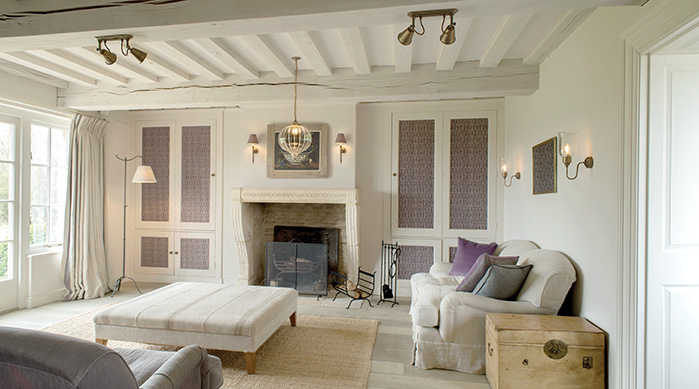
Layered light in a living room

In this living room, the Orla Pendant Light is the main source of ambient light supported by the Double Curtis Spotlights. If you are lucky enough to have a useable fireplace at home, nothing beats firelight as a source of cosy, comforting accent light, although you will need a log basket and tool sets to keep the hearth clean and working efficiently.

The Chester wall lights on the right and Grantham wall lights either side of the fireplace will create lovely layers of accent light to complement firelight, while the Nayland Adjustable Reading Lamp provides excellent tasking light for reading by if placed next to an armchair or sofa. If you have a desk or study space in your living room, you may want to include a desk lamp or downlighter (task light) for practical purposes like reading or writing. And don’t forget to think about statement lights (accent light) to create a decorative focal point over a seating arrangement, dining table or to define different zones in an open plan space.

KITCHENS


Brighter levels of light are required for prepping and cooking food in kitchens, so tasking light is key in this important space. But don't just rely on recessed spotlights that can make the space seem flat, instead use a combination of ceiling lights, pendants, adjustable wall lights and downlighters to bring the room to life as well as provide practical light. You can use table & floor lamps in kitchens to boost lighting levels and dial up the right mood for eating, working and relaxing, transforming your kitchen into a place of beauty.

Lights for a kitchen and dining space
In this open plan kitchen, the Edgeware Spotlight Strip - 4 spots, helps to define the 'working' zone in the setting as well as providing tasking light for the kitchen area, while the Chalford Pendant lights work to bring the naturally reflective beauty of glass to the room, perfect for achieving a soft glow to encourage relaxation, and a feeling of fluidity as glass opens up a space making it feel larger and brighter.

BEDROOMS


Perhaps the room where it is easiest to layer light given that we instinctively seek bright levels of light in the morning to help us wake up, but lower levels at night for inviting sleep. Try to focus on creating soft layers of bedside light for a calm, relaxing space, but with the option of bright light for our morning routines. Layer ceiling and bedside wall lights with bedside table lamps and wall lights that can double up as tasking light for reading. 

Layered lighting for a bedroom
In this bedroom, the Edgeware Spotlights on the overhead beams are the main source of ambient  light, while the Club Wall Lights above the bed cast soft pools of light over the walls that work as accent and tasking light for reading or working by, especially if used with conjunction with dimmable bulbs and a dimmer switch so you can dictate how bright they are. The Harleston Fluted Table lamps blend beautifully into the scheme adding additional layers of light to the space and helping to create an atmosphere of cosy comfort as well as a balanced, harmonious space.


DINING ROOMS


Often one of the easiest rooms to light because the dining table takes centre stage enabling us to build lighting around it. Fit a decorative ceiling hung pendant or chandelier above a round dining table, or a trio of pendants along a long table and build up layers of light with table lamps, floor lamps and wall lights around the room to add flattering layers of light and different moods.

Layered lighting in a dining room
This dining space features two of our antiqued brass pendant lampholders with 45cm Wide Cylinder shades in cream killowen linen, hung over the dining table. The Single Edgeware Spotlights on the metal girders add layers of accent light, while the Portland Floor Lamp  and Porter Table Lamps continue the flow of light through the setting.

BATHROOMS


Perhaps the only room in the home where you can get away with using a single overhead lighting source as these spaces tend to be smaller. However, it’s more visually pleasing to balance and soften your bathroom lighting with accent lights on walls and vanity units to introduce a feeling of warmth and calm.

Layered lighting in a bathroom
Layered light abounds in this bathroom where a centrally placed Ava Bathroom Pendant Light works with the Mia Bathroom Wall Light on the left to provide plenty of ambient light, while the Single Malvern wall lights with their fabric shades create accent light to soften the mood.

For more information about bathroom lighting see our handy guides: IP Ratings Explained
Your complete guide to bathroom lighting
How to light a small bathroom


To stay up to date with Jim Lawrence, follow us on Instagram, Facebook and Pinterest. Browse our website www.jim-lawrence.co.uk to see all of our hand forged and finished lighting and homeware.


Follow us