Lighting plays an essential role in our homes, not just for providing the right level of light to see by, but for helping us to bring warmth, atmosphere, mood and comfort to a space. Designers talk a lot about layering – putting together different patterns, colours, textures and materials to create an interesting, individual look in a room - and layering light is no different. You need to combine different levels of light from different sources – ceilings, walls, floor and table lamps - to create an even balance, and particular mood. Read on to learn how to layer light by mixing and matching these different kinds of light to achieve the right effect.
What is layered light?
There are three kinds of light that you need to consider when planning your lighting scheme to ensure there the right levels of brightness in a room – bright light for working and softer light for relaxing - and the right kind of lighting for creating the environment you’d like to achieve. Without them the space may feel flat and uninviting. Layering light is all about combining these three types of light to create a successful scheme.
Ambient – the general level of light available in a room, including daylight.
Task - stronger or more targeted light for practical activities.
Accent – softer, decorative light for creating warmth, mood and highlighting features or areas in a room.
The key is understanding how ambient, task and accent lighting work together to create a balanced feel. Generally, you need to combine at least two, if not all three, of these types of light to achieve the best outcome. Remember, to ensure any room is properly lit and balanced, you need use at least three light sources placed around the space. This could be a from a combination of ceiling lights, wall lights, floor lamps and table lamps.
AMBIENT LIGHTING
This is the general level of illumination you need to be able to see into the furthest corners of the room and to move around it safely. The light doesn’t need to come from a single source and generally refers to the wired wall and ceiling lights you turn on and off with the flick of a switch.
For an average sized room you will generally need a mix of ceiling fitted flush or pendant lights combined with wall, picture and/or spotlights. In the barn kitchen shown above, the two
Leiston Pendants provide the most ambient light, but given the room's large size, additional ambience is provided by the
Club Wall LightsTASK LIGHTING
This is your brighter, more focussed practical light that lets you perform specific activities and tends to refer to sources that offer targeted light; a down lighter for reading by, a desk lamp so you can see your keyboard, vanity lights in a bathroom for grooming, spot lights over a food prepping area, or adjustable bedside lights for reading.
Tasking light can be wired in, like wall lights and spotlights, or movable, like table and floor lamps - as long as the light they provide is bright and focused enough for the specific jobs you need to undertake. In the kitchen lighting scheme shown above, the
Club Wall Lights and
Abercrombie Table Lamp provide ample tasking light.
ACCENT LIGHTING
This refers to decorative or additional light sources that work alongside ambient and task lights to help you to create the right mood in a room or create a focal point. You can use accent lighting to highlight architectural features, high ceilings, pictures, alcoves, to bookend a fireplace or entrance, or to illuminate shelving. Think picture lights, statement pendant lights, multi-orbed standing lamps, table lamps and floors lamps.
Our farmhouse kitchen above might be used for eating as well as cooking and prepping food, in which case softer, accent lighting can be achieved by turning off the Club wall lights in the kitchen area and keeping the light source limited to the
Leiston Pendants, with the
Abercrombie giving an additional boost on the counter top behind. Out of shot, our
Edgware Spotlights are fitted to wooden beams for casting lovely pools of light upwards towards the vaulted ceiling, while the
Double Gosford Wall Lights with their fabric shades, help to diffuse soft light across the space.
WHY IS LAYERED LIGHTING IMPORTANT?
Layered light is essential for bringing a room to life. It creates the right atmosphere, helps set the mood, adds character and brings versatility and flexibility to the space so you can use it for more than one purpose. Mixing and matching multiple light sources means that the room you use for work in the daytime can be transformed into an elegant space for entertaining in the evening and a cosy nook for reading late at night.
WHERE DO I START WITH LAYERING LIGHT?
BEGIN WITH AMBIENT LIGHT
We recommend considering the amount of general (ambient) light you need to light the space first. Remember you will need more light for functional areas like kitchens and bathrooms, and softer light for informal areas like living rooms and bedrooms. Start with the ceiling and decide how many ceiling lights or pendants you need to provide a good a spread of light throughout the room. In the sitting room below, our Large Balmoral Pendant Light is the provider of ambient light.
For a complete guide on what to consider for ceiling lights, see our Knowledge Base pageLighting Your Home, and for fitting above kitchen islands; our Kitchen Pendant Guide.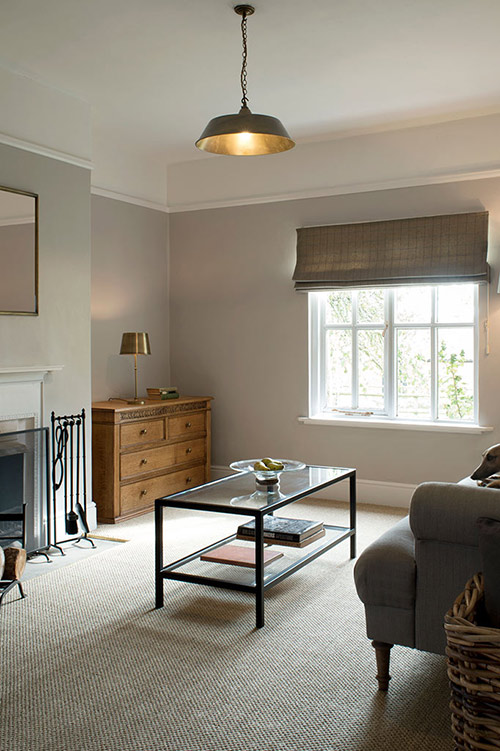
ADD TASKING LIGHT
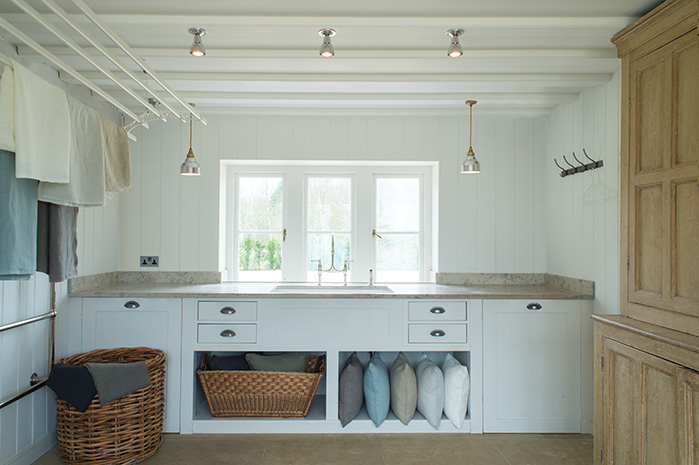
In kitchens, bathroom and cloakrooms, consider where you need the most light for prepping or cooking food, washing and grooming and put your task light here. Consider directional wall or spotlights in the kitchen and bathroom wall lights for a vanity unit or wash basin in a bathroom. In the utility room below, our
Weston Pendant Lights fitted either side of the sink act as tasking light. The
Edgeware Flush Mount Ceiling Lights in the foreground work as ambient light in this setting, but can easily provide tasking light if fitted nearer a sink or cooking area.
FINALLY, LAYER IN ACCENT LIGHT
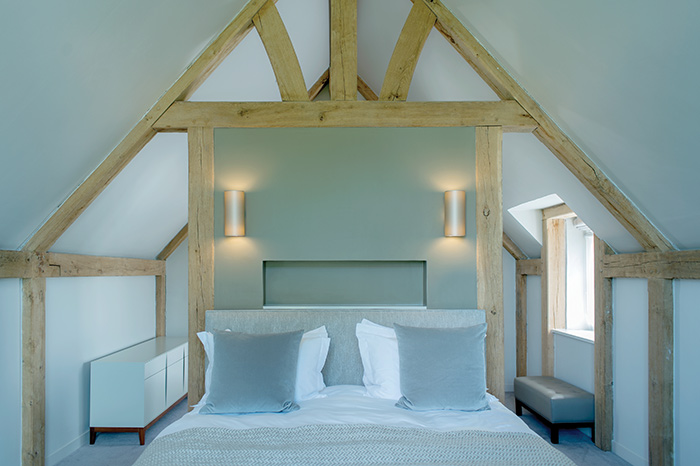
The final touches to your lighting should be your accent lights. In the bedroom below, our
Lamarsh Wall Lights flush the wall above the bed with a soft glow that helps us to relax or read by, and getting us in the right mood for sleeping. Often the best source of accent light is a well positioned table or floor lamp. These can be used anywhere and are excellent for boosting light in dark corners, or creating softer layers of light to diffuse the brighter light from ceilings or wall lights. This is also when you can plan your decorative lighting, exploring how it works with other elements in the room.
To stay up to date with Jim Lawrence, follow us on Instagram, Facebook and Pinterest. Browse our website www.jim-lawrence.co.uk to see all of our hand forged and finished lighting and homeware.

Follow us