DefaultPageTemplate.ascx

HOW TO LIGHT A SMALL SPACE
Quirky architectural features like low ceilings, sloping eaves, wide chimney breasts, ancient beams and awkward nooks, make our homes wonderfully attractive, adding character and interest but they can also make a room feel smaller and darker than we’d like. Creating the illusion of space in a small room is a challenge, especially when it comes to lighting, so read on for our top tips for turning a ‘snug’ space into an open and airy one.
TOP TIPS
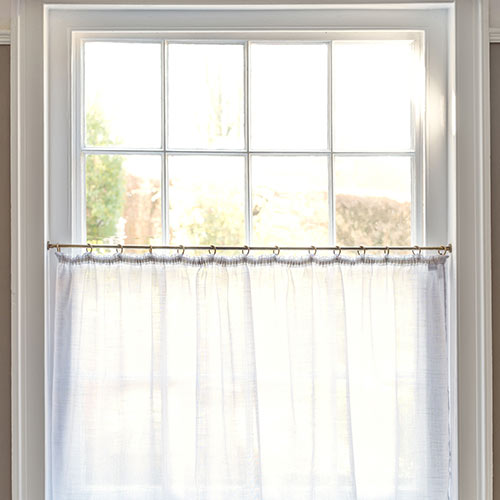
1. Maximise Natural Light
Make the most of any available daylight. Unless you want the intimacy of a dark space, decorate your room in light-reflecting off whites, naturals or pastel colours that will help create a feeling of openess.
Light colours reflect more light than dark ones which absorb it making the room feel smaller. Keep window dressings light by using sheer fabrics and voiles, cottons and linens in natural or pastel colours to let in as much light as possible.
If you match the colour of curtains and blinds to paintwork on window frames and walls, it will open out the room making it feel lighter and larger.
Shop handmade Curtains & Blinds.
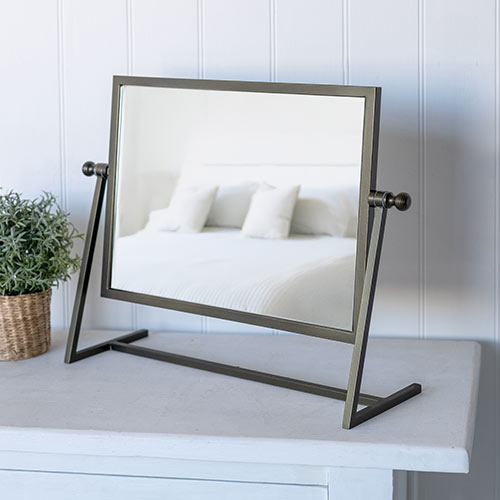
2. USE MIRRORS...
Place a large mirror opposite a window as this will significantly increase the amount of natural light in a room and almost double the sense of space. Mirrors reflect light everywhere making a space feel brighter and create the illusion of depth that enhances the feeling of space.
...AND INCORPORATE GLOSSY FINISHES
Using semi-gloss or satin finishes on walls, ceilings woodwork and furniture can help reflect light and increase the sense of space. Glossy surfaces like glass, mirrors and metallic finishes also contribute to a brighter, more open feel.
Find your ideal mirror from our range.
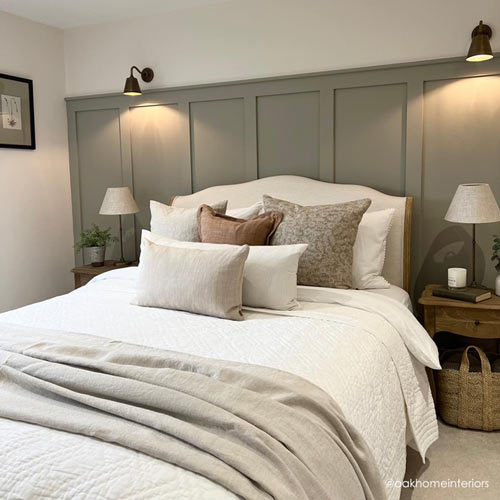
3. CREATE AN EVEN SPREAD OF LIGHT
The key to good lighting, especially in a smaller room, is to create an even spread of light throughout the area. Dark corners and shadows will encroach on a space, making it feel cramped. Banish them and you will open the room up making it feel more accessible and airier.
Even lighting requires a mix of light sources rather than a single central one. Don’t be tempted to use a single ceiling light as this has the effect of creating an ‘island’ of bright light in the middle of the room that makes shadows seem darker.
Instead, opt for two or three ceiling lights, combined with wall lights and a scattering of table or floor lamps for those harder to reach spots. Place them throughout the room to create layers of light so that light floods through.
See our blog: How to layer light in the home.
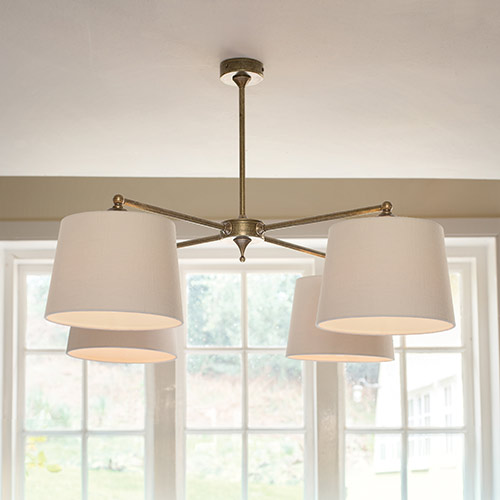
4. MAKE THE MOST OF HIGH CEILINGS...
If your small room has a high ceiling, consider hanging pendant lights as this will emphasize the vertical space, drawing your attention upwards and away from a narrow or tight floor space.
Pendant lights and chandeliers should be chosen carefully; in small rooms, simpler designs that don’t overwhelm the space work best.
Find your perfect pendant from our range of beautifully handcrafted pendant lights.
...AND AVOID OVERHEAD DOWNLIGHTS
Downlighters can create harsh shadows that make a room feel smaller. Instead, consider diffused light sources such lights with frosted, opal or fluted glass, and fabric lampshades that will diffuse the light making it feel softer.
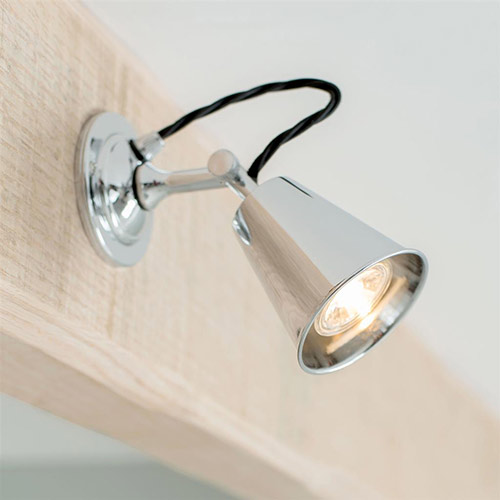
5. OPT FOR SPOTLIGHTS
If you have a low or sloping ceiling that doesn’t lend itself to pendant lighting, consider spotlights that can be fitted to walls, wooden beams and ceilings without intruding.
Spots are ideal for smaller spaces as they can be angled to shine into dark eaves, alcoves or corners and used as uplighters to get rid of shadows and illuminate even the darkest of spots.
See our beautiful collection of Spotlights.
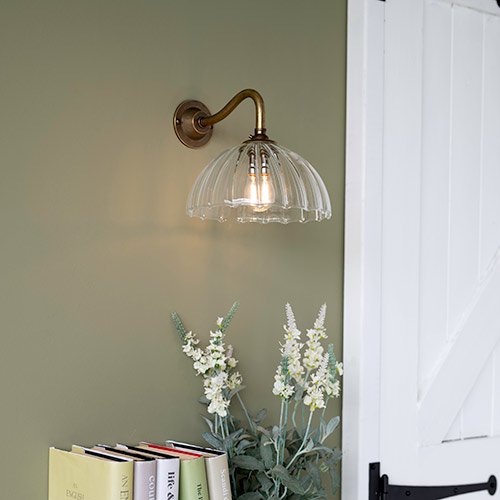
6. FREE UP FLOOR SPACE WITH WALL LIGHTS...
If you room will allow it, wall mounted lights are a fabulous way to maximise your space, as they free up the floor and direct light upwards towards the ceiling. This creates a soft, indirect glow that spreads evenly and enhances the perception of height or depth in a room.
Consider fitting flush fitting wall lights that don't project too far into the room and fit them at eye level or higher to make the room feel larger.
..AND CHOOSE GLASS FOR AN OPEN AND AIRY FEEL
Glass shades are naturally reflective and will bounce light around the room making it feel open and airy and creating a focal point without encroaching on the sense of space.
Shop Glass Wall Lights.
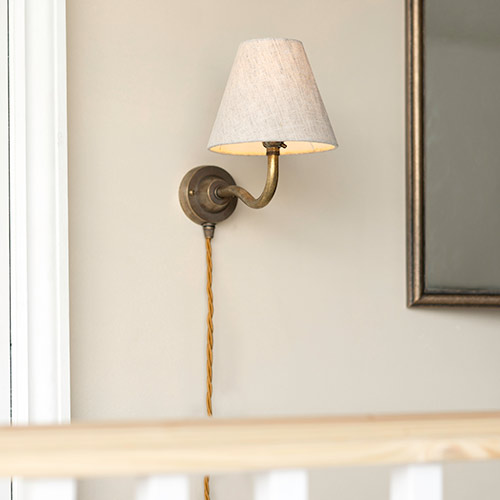
7. PLUG-INS FOR AWKWARD SPOTS
Designed to give you instant lighting wherever you need it, without the need for an electrician, our plug-in wall lights are perfect for older homes with quirky wiring schemes or awkward areas where a floor lamp won't work.
All you need is a plug socket nearby to plug it in and off you go.
Find your perfect plug-in light
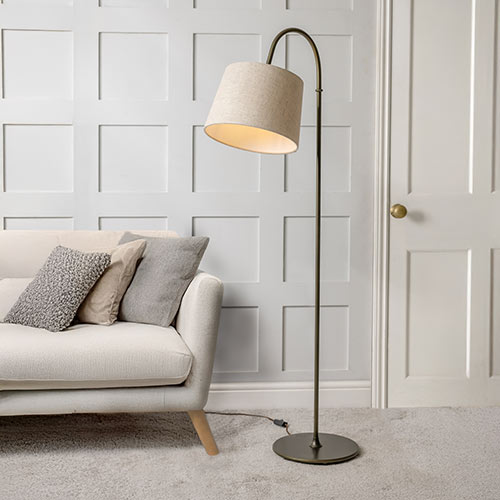
8. TABLE & FLOOR LAMPS ARE A MUST!
If you live in an older home where wiring is an issue, or don't have wall lights, use floor and table lamps placed into corners, or next to furniture around the room to ensure light flows evenly throughout and create a feeling of expansiveness.
Floor and table lamps are brilliant for adding layers of light without cluttering the space. Slim, sleek designs are ideal for small rooms.
Choose from a range of table lamps and floor lamps
9. CONSIDER THE COLOUR OF BULBS
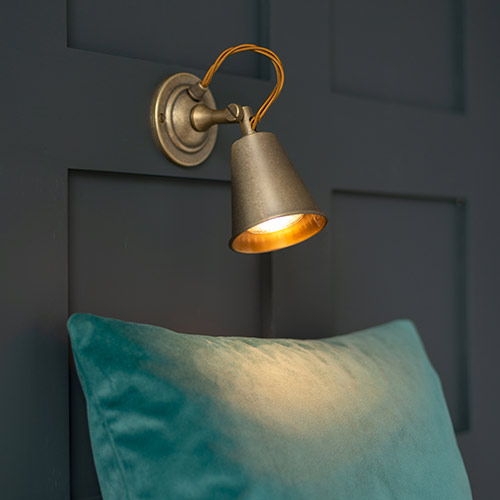
The colour of light bulbs can greatly affect the perception of space. Warm white light (2700K-3000K) creates a cosy, intimate atmosphere, while natural white light (3500K-4100K) feels brighter and more open.
For small rooms, a neutral white light is generally preferable as it mimics daylight and can make the space feel larger.
Try using consistent colour temperatures throughout the room to ensure it looks harmonious look as different colours produce visual breaks that make the space feel disjointed and smaller.
For more information, read our Complete Guide to Bulbs