DefaultPageTemplate.ascx

WHAT TO CONSIDER FOR WALL LIGHTS
Wall lights are an essential part of any interior lighting scheme as they are perfect for bringing subtlety, interest and warmth to a room. A great lighting scheme is all about creating layers of light - pairing ceiling lights with wall lights and adding floor and table lamps as required - so you have the right mix of bright light for working by and ambient light for relaxation.
Why Use A Wall Light?
VERSATILE - wall lighting is the most versatile of light types as it can work on many levels providing ambient light for a even spread of light in a room; accent lighting for a feeling of warmth and security, and if you opt for a fitting with a focused beam of light - tasking light for reading or working by.
LAYERED LIGHT - combined with ceiling lights and table and floor lamps, they help create those all important layers of light in a scheme, ensuring a balanced spread of light and sense of harmony across the space.
CHARACATER - Wall lights are ideal as reading lamps in a bedroom or gentle tasking light near a mirror in a bathroom. They make a great alternative to table lamps for a bedside; fitted over a work surface or preparation area in a kitchen and near a sofa, fireplace or shelving unit for characterful living room wall lights.
WIDE CHOICE OF DESIGNS - at Jim Lawrence we make wall lights that plug in, wall lights with a switch, IP rated bathroom wall lights and kitchen wall lights that instil your space with soft, relaxing illumination. Our wall lighting is available in a range of designs - modern, industrial, traditional, rustic and vintage - to suit your personal style, and come in a choice of painted, plated and antiqued finishes in brass, black, nickel, polished and copper.
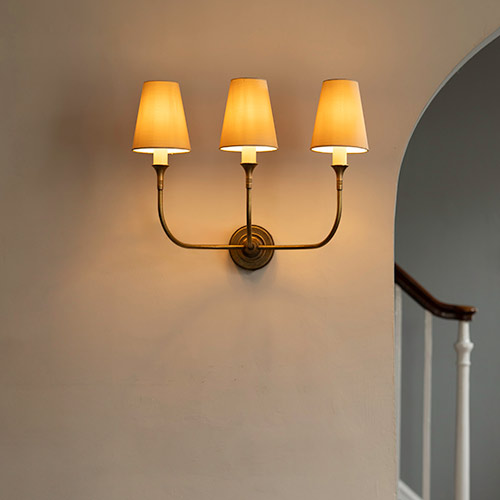
TOP TIPS FOR GREAT WALL LIGHTING
WHAT DO YOU NEED?
Consider what you are using your lighting for. Do you need general ambient lighting for a warm, cosy atmosphere?
Are you looking for brighter, tasking light for reading or working by? Or, are you wishing to create decorative accent lighting to showcase a piece of artwork, furniture or introduce dramatic impact?
PICK YOUR PLACEMENT
Start the process by thinking about where you want your to lighting to come from.
Consider the amount of natural light that is available and think about where you have dark corners or shadowy sections that need brightening up.
If you want to create a reading corner or home study, consider fitting a wall light above or near this spot so you have a specific light source.
BULB POINTING UP OR DOWN?
Wall lights with bulbs that point upwards (uplights) are designed to throw their light upwards along a wall and will open up the room giving it more sense of space.
Wall lights that point down (downlighters) cast the majority of their light downwards creating a brighter, more specific and dramatic pool of light that will make a room feel cosy and is better as tasking lights for reading or working
INCORPORATE MULTIPLE LAYERS
Remember, wall lights should be just one of the layers of light you use in a room.
Incorporate other layers using floor and table lamps for accent lighting and spotlights and directional lamps for tasking light.
WHAT ARE MOST COMMON TYPES OF WALL LIGHT?
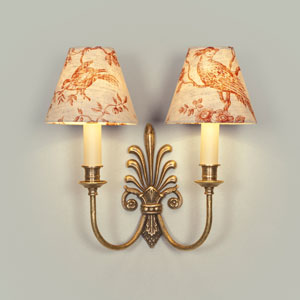
WALL SCONCES
Wall lights come in all shapes and sizes and generally wall sconces is an old fashioned term that refers to vintage-style or antique, decorative wall fittings inspired by candles and oil lamps.
They often have a rustic feel or ornate ambience that is perfect for adding a period touch to your interior and for lending the space a sense of warmth and intimacy
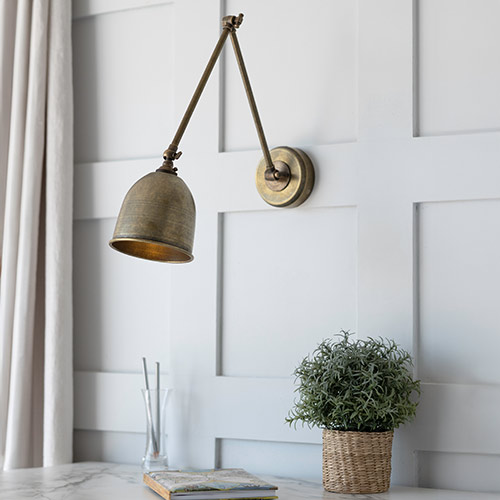
ARTICULATED WALL LIGHTS
Also known as adjustable wall lights, these fittings have an articulated arm that enables it to swing into different positions, either from side to side like our Hanson or Clayton wall lights, or up and down like our Borough Articulated wall light shown above.
The beauty of adjustable wall fittings is that you can direct the light where you need it, keeping space free on a table or unit, ideal for tasking jobs in the kitchen, study or as bedside lights for reading.
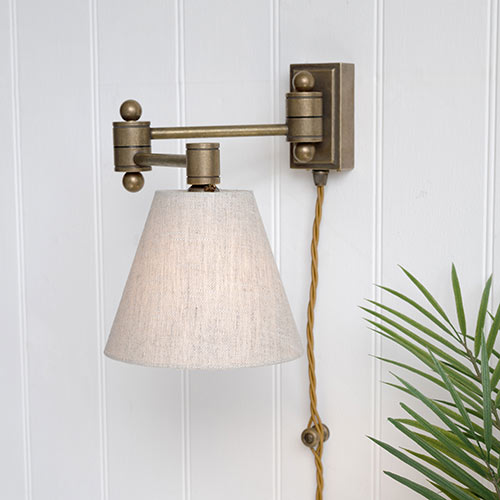
BEDSIDE WALL LIGHTS
Wall lights make excellent bedside lights for reading or working by whether in a bedroom or a cosy reading nook in a living room.
Choose a wall fitting with an adjustable arm for maximum flexibility and a plug-in option for easy fitting as no wiring is required, just fix it to the wall, plug it in and off you go!
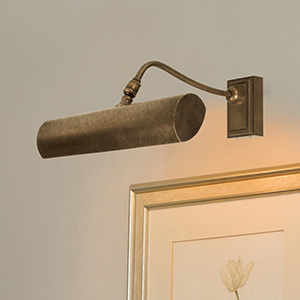
PICTURE LIGHTS
These are versatile wall lights that not only highlight your favourite paintings or art works, but also add gentle layers of light to any room.
Our Drummond Picture Lights have the option of being wall or frame fitted and their long, narrow design lends itself to being used as additional lighting in small nooks and crannies, alcoves or on shelving units and book cases.
For more targeted lighting where you wish to illuminate a specific architectural feature or area of the room, opt for a spot lights that have a more focused beam.
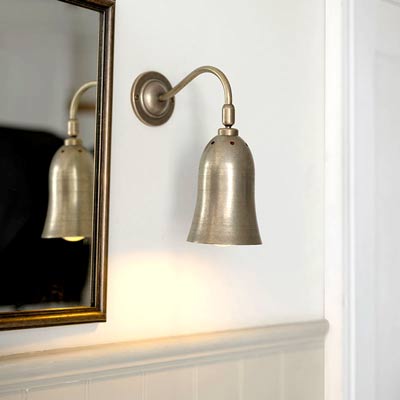
WHAT DO I NEED TO THINK ABOUT FOR HALLWAYS?
Spaces with low ceilings can feel a little cramped so often look better with wall lights which, if fitted high enough, will draw the eye up and make the space feel open. Wall lights are great for brightening up staircases and landings.
SPACE LIGHTS EVENLY - by spacing lights at even intervals down the length of a hallway or landing you will avoid shadowy dark areas.
PLACE THEM AT EYE LEVEL - you are most likely to be standing when using a hallway, so choose a wall light that looks good straight on and fit it at or just above eye leve to eliminate glare.
CONSIDER THE WIDTH OF YOUR HALLWAY - opt for flush wall lights if you have a narrow space, or wall lights with more generious arms if you have a wide hallway. Wall lights are often the only lighting in a hallway so opt for a decorative desgin to add visual interest.
INCORPORATE MIRRORS - bounch light around your hallway by hanging a mirror inbetween your wall lights.
For more hallway lighting ideas, see our collection of Hallway Lights
TOP TIPS FOR LIVING ROOM WALL LIGHTS
Living room wall lights will add to the beauty of your room so choose decorative designs that reflect the colours and/or style of the room.
SPACE LIGHTS EVENLY - use wall lights as ambient lighting by spacing them evenly around a room. Living rooms are often formal in character so lights look better fitted in pairs next to architectural features like windows, doors, fireplaces and chimney breasts, alcoves or works of art.
CREATE TASK LIGHTING - if you are looking for reading light choose something that looks lovely with your favourite sofa or armchair and place your lights over or near your reading nook or desk where you need it most.
CONSIDER PLUG-IN WALL LIGHTS - for an easy 'out-of-box- solution that doesn not require wiring and can be moved to suit your needs.
We have a huge collection of lights for living rooms Living Room Lighting Ideas
WHAT TO CONSIDER FOR BEDROOM WALL LIGHTS?
Bedroom lighting needs to be flexible to allow for bright light to carry out functions like reading, dressing, working or grooming but also softer light to promote relaxation and sleep.
CONSIDER BEDSIDE LIGHTING FIRST - select a wall light that will fit neatly next to or above your bed for ample reading light. Placing them at shoulder height is generally a good idea so they are easy to swithc on/off from the bed.
USE DIRECTIONAL LIGHTS - or angled wall lights to focus pools of light where needed. Spotlights work as both tasking and ambient light and can be fitted anywhere – to walls, ceilings, beams, shelves and wardrobes.
SWAP BULBS - change bulbs that give off white/blue light for LEDs that have a soft warm white light to encourage sleep.
USE DIMMER SWTICHES - with your bedroom lighting to ensure even more control of lighting levels.
For more bedroom lighting ideas, see our Bedroom Lighting collection.
WALL LIGHTS FOR DINING ROOMS
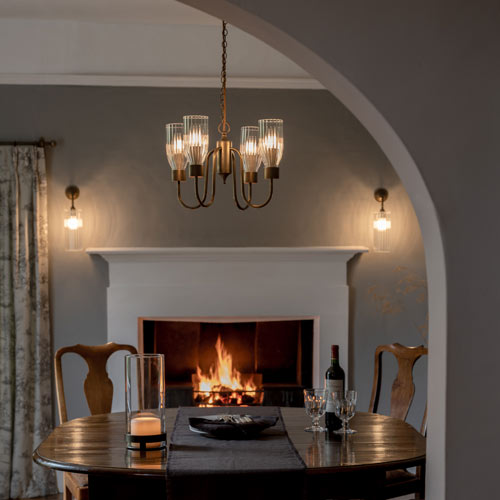
An ideal place for wall lights as they may be crucial for creating the right atmosphere. Unlike living rooms, a diming room may not have as many accutrements like ornaments and soft furnishings to create a relaxed feeling so lighting becomes all the more important.
BASE WALL LIGHTING AROUND THE DINING TABLE - and consider soft lighting as it is more flattering and intimate. Becasue we tend to use dining rooms at night, you can afford to be more dramatic in your choice of lighting.
COMPLEMENT THE LOOK OF PENDANT LIGHTS - select wall lights that complement any overhanging ceiling pendants you have above your dining table - choose something in the same finish, colour or that reflects the same shape.
CONSIDER TASKING LIGHT - use wall lights to boost light where you need it such as to flank a serving table, doorway or fireplace.
USE DIMMABLE BULBS - think about using dimmable bulbs and dimmer switches to alter the brightness of your light.
For wall lights in dining rooms, browse our Dining Room Lights collection.
HOW TO CHOOSE BATHROOM WALL LIGHTS
CHOOSE THE RIGHT IP RATING - different areas of the bathroom require different levels of protection from moisture so make sure you have the right fitting in the right place.
For more information, see our guide - IP Ratings Explained.
CREATE VANITY LIGHTING - the best place to fit bathroom wall lights is either side, or above a mirror so you have the right level of light for grooming and washing. Tor flattering light fit them so the centre is at eye level.
PLACE LIGHTS NEAR REFLECTIVE SURFACES - to make a bathroom seem larger as the light will bounce off surfaces and mirrors making a space seem more spacious.
USE DIMMABLE LIGHTS - wall lights fitted with dimmable bulbs and governed with dimmer switches will give you more control over your lighting and help create a cosy spa-like feeling for relaxation.
For our collection of elegant, IP Rated wall lights for the bathroom, browse our Bathroom Wall Lights.
What size picture light should I choose?
Lighting pictures is not an exact science, but a basic rule of thumb is to position pictures on the wall with the centre at eye level - about 1.5m (5ft) from floor level and to position the picture light centrally above the picture.
Most picture lights have adjustable heads that can be swivelled to direct the light correctly onto the picture below.
LANDSCAPE PICTURES - choose a picture light that is 1/2 to 1/3 the size of the picture not including the frame.
PORTRAIT PICTURES - select a picture light that is as close to 1/2 the width of the picture as is possible, not including the frame.
For more information, see our Picture Lighting Guide