DefaultPageTemplate.ascx

COMPLETE GUIDE TO LIGHTING YOUR HOME
WHAT DO I NEED TO CONSIDER WHEN IT COMES TO LIGHTING?
First consider the amount of light you need and how much natural light is available. South and west facing rooms tend to be brighter and warmer than north or east facing rooms that are darker and cooler.
If you get a lot of sunlight, you may only need ambient low lighting to relax with at night, whereas a shady room may require a few lighting options to maintain a lovely light throughout the day. Accent lighting created by wall lights, table and floor lamps are great tools for creating ambience, whereas desk or reading lamps are more practical when a brighter, more focused light is needed. How much of each you need depends on what you want to use the room for.
When considering lighting, there are three types you need to think about.
Ambient light – general lighting that fills the room and usually refers to ceiling lights.
Task light – more focused light for tasking such as working, reading, prepping food or cooking. Could be wall, ceiling, table or floor lamps.
Accent light – decorative light that creates the right mood or atmosphere and a balance of light in a space. Could be strip LED lights, candlelight or a table or floor lamp.
Rooms that are multi functioning such as a kitchen, bathroom or utility will require more light than a bedroom or living room. Centrally placed ceiling or pendant lights provide ambient light all round a room, so are better for general tasking purposes, whereas wall or ceiling mounted spot lights can be angled towards you to give brighter, focussed light where needed, or away from you onto a wall or ceiling to add accent light to the room.
For more information on lighting types and FAQs, see our guide: Lighting FAQs

HOW MUCH LIGHT DO I NEED?
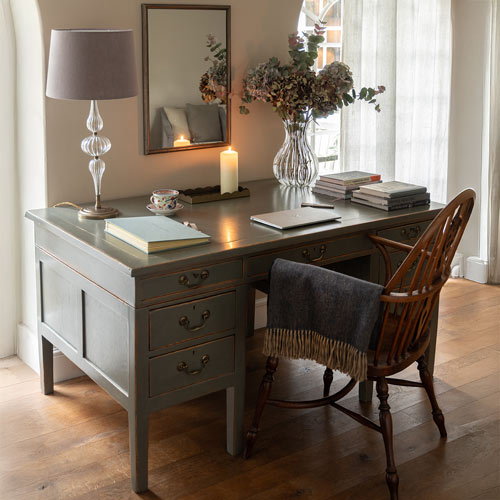
As a rule of thumb, you need light from at least three sources around a room to ensure there is an equal spread of light. This is provided by a ceiling light with a mix of wall lights and table and floor lamps.
When it comes to brightness levels, generally around 400 lumens (40W incandescent) is suitable for a bed-sized table lamp, whereas you might want between 1,500 and 3,000 lumens in total (from more than one bulb) for a good-sized living room.
You can work out the level of light you need by calculating your room size in square metres and multiplying it by 19 for LED bulbs and by 15 for halogen bulbs. For example, if your room measures 4m x 5m it has an area of 20 square metres. If you are using LED bulbs, multiply this by 19 (20x19) giving a total of 380 watts, or a total light level of 3800 lumens.
The lumen level of each bulb will vary depending on the type of bulb and manufacturer, so check the specific lumen level of each bulb to ensure you reach your overall target.
This is only a rough guide as you may wish to have slightly more light in a kitchen or bathroom and slightly less in a bedroom.

WHAT DO I NEED TO CONSIDER FOR KITCHEN LIGHTING?
A great kitchen lighting scheme has the power to transform an ordinary kitchen into a truly spectacular one. Now that we’re living in increasingly open plan spaces with kitchens at the heart of your home, they have to perform on a multifunctional level with lighting that needs to cater for tasking, dining, relaxing, office or homework and entertaining.
The rules that apply to kitchen lighting can be applied to every room in your home in that cleverly positioned lights can make a small room appear larger, disguise awkward architecture or compensate for poor natural light.
Look at your room and think about the activities that happen in each area.
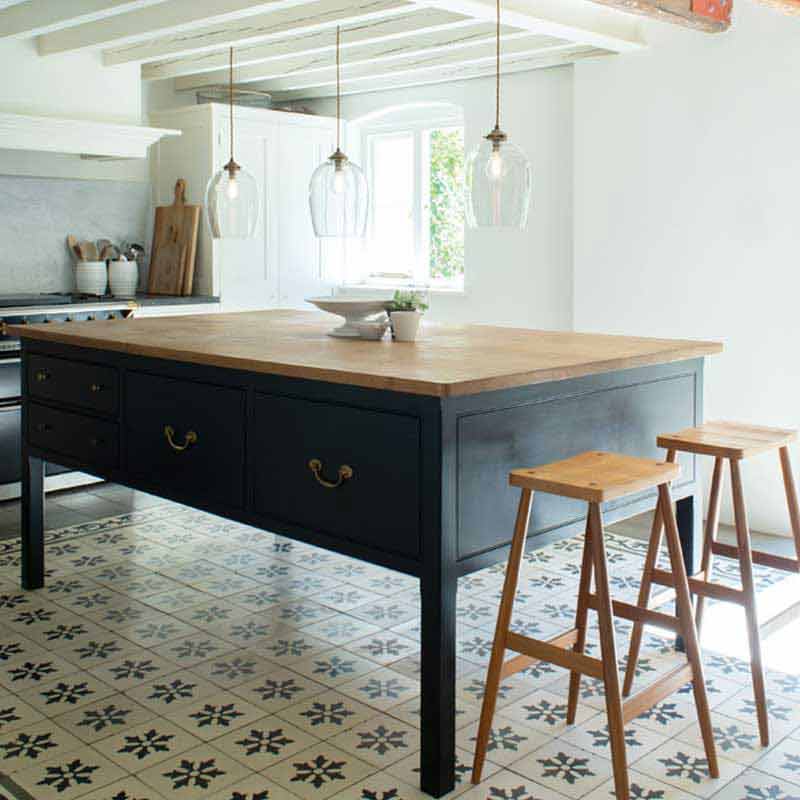
Some spaces, like food preparation zones, the sink and above the hob in a kitchen will require task lighting, as will a desk, table, kitchen island unit or breakfast bar.
Other areas in your kitchen, such as your dining space or any areas you have earmarked for relaxing will require softer ambient or mood lighting to create a sense of warmth, intimacy and calm.
For a guide on how to space pendants above a table or kitchen island, see our: Kitchen Pendant Guide
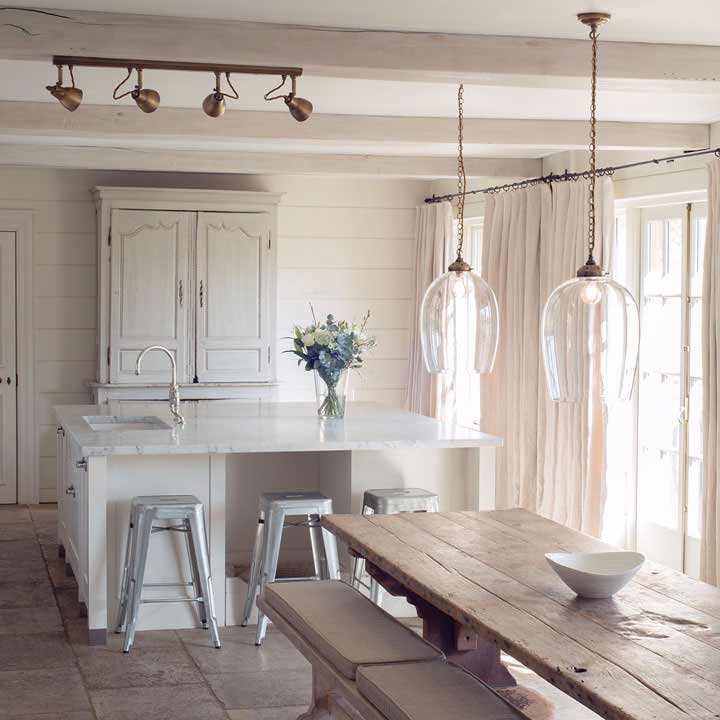
TASK LIGHTING
Task lighting refers to the places where you work the most so need the brightest lights, such as worktops, over the cooker and sink.
There are lots of varieties to choose from, from compact fluorescent strips or LED under-cupboard downlighters that are slim enough to be recessed into the bottom of overhead units, to flexible LED strip lighting mounted on the underside of cupboards.
Using dimmable bulbs with a dimmer switch is a fantastic way to achieve versatile lighting as you can choose to have bright light were needed and create soft, ambient light by decreasing power to the light source.
As well as creating a focal point in your room, ceiling lights are omnidirectional – casting their light equally everywhere – which is a must for tasking purposes.
Alternatively, spotlights angled directly above the hob, sink and food prepping areas will ensure bright, focused lighting. They can also be fitted to beams or vaulted ceilings and angled away from the 'working spaces' to banish harsh shadows in high ceilings or dark eaves.
ACCENT LIGHT
If you have a kitchen diner or family room adjoined to your kitchen you will need to create a softer ambience to make everyone feel relaxed.
Start by looking at how much natural light comes into the room and where it falls and where you need additional lighting. It’s worth considering dimmable wall lights or spots lights that can be moved alongside more decorative systems, as these will give a subtle background illumination.
For high ceilings, uplighters on top of the kitchen cabinets or spot lights hung along beams will enhance the general light.
For island units or kitchen tables, consider hanging pendants that focus light on the area below or a rise-and-fall fixture above the table that can be pulled down for a cosy candlelit supper or raised for everyday meals and other activities.
If possible, make sure your lights are controlled separately so you can create different moods at the flick of a switch.
For more top tips for lighting sloped ceilings see our guide: How to light sloped ceilings.
For hand advice about small spaces, see: How to light small spaces.
And for more information about lighting low ceilings, see: How to light low ceilings.
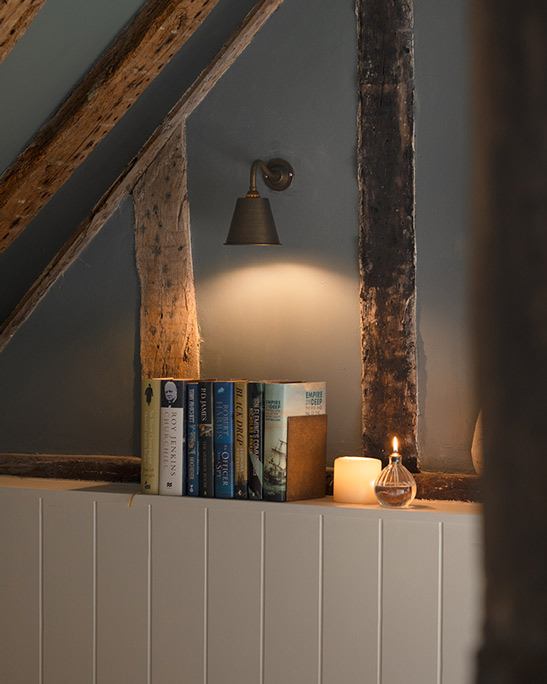
STATEMENT LIGHTING
The final layer of lighting that you will need to consider is how to create character and drama in your room.
This is done using accent or feature lighting that guides the eye, creating a focal point or points of interest around the room as well as adding to the overall light.
Statement lights could be ceiling or wall light that create instant visual impact, or strategically placed floor or table lamps that create an interesting tableau with furniture to help define a space.
A series of beautiful pendant lights or a fabulous single statement piece fitted above a dining table will help differentiate the dining space from the kitchen’s work zones.
Try hanging pendants low over the table for a feeling of intimacy or position them high over kitchen islands. This not only provides a great source of light, it also adds interest, breaking up the austere lines of cabinets.

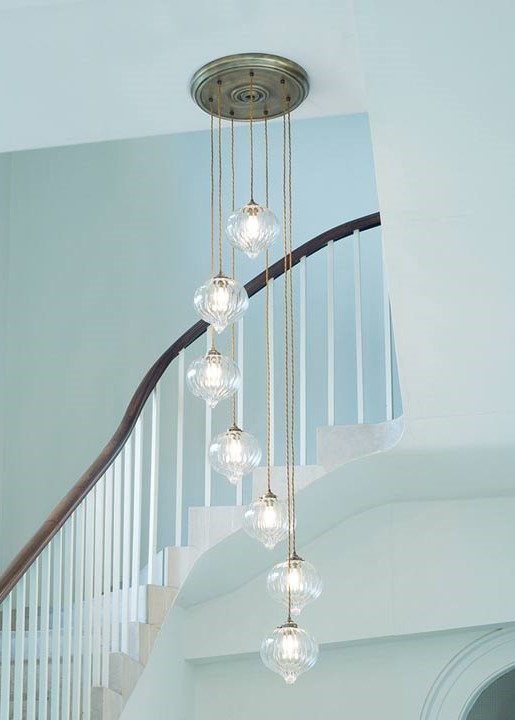
The same basic rules about hanging pendants at least 7ft off the floor applies to entrance halls and foyers, but if you have a double height ceiling over two floors, the light fitting should ideally not hang below the second floor. If you are hanging your light higher to compensate for the two story setting, you may wish to consider one of our multi pendant lights to ensure it does not look too small for the setting.
What if I have a high or vaulted ceiling?
Fitting hanging pendant lights from a sloped ceiling is generally not an issue as the pendants will hang straight regardless of the angle of the ceiling rose or track.
If you have a high ceiling, you may need to extend the length of the cables to account for this, and in some cases - if the ceiling slope is particularly steep, you are fitting lights in a small space, or if you want to hang them at the apex of the ceiling, you may need to make adjustments to the ceiling fitting to account for the slope. However, if you have enough space for your pendants to hang at least 3ft away from a wall, to minimise any harsh shadows, they should be fine.
It is important to consider how you are going to change the bulbs for pendants suspended from a high ceiling. We recommend investing in LED bulbs as they have a long life – usually around 25,000 hours – so will not need changing often. A light that can be accessed by a ladder will make changing the bulbs a lot easier, as would be one that could be reached by the upper floors if you have a galleried landing.
If your light will be totally out of reach, another option is to consider installing a specialist winch or hoist. There are a number winches on the market which will enable you to lower your light fittings to the desired level for maintenance to be carried out in total safety. Most are fairly compact and can be easily fitted between joists.