DefaultPageTemplate.ascx

THE ULTIMATE GUIDE TO OUTDOOR LIGHTING
Outdoor lighting can completely transform a garden, driveway or patio, making it safer, more practical and look far more inviting after dark.
Whether you want subtle mood lighting for entertaining or bright security lighting around your home, choosing the right fittings involves more than simply picking a style you like.
From weather protection and materials to placement and power supply, there are several important factors to consider before buying outdoor lights.
Read our handy guide to find out what you need to think about when planning a garden lighting scheme; find out about the different types of exterior lights there are and the best materials they should be made of to ensure they are safe and long lasting, and where to place them to create a beautiful, inviting garden long after the sun has set.
For further inspiration, see our blogs on your garden essentials:
Make your home more inviting with outdoor lights
8 Accessories to style-up your garden
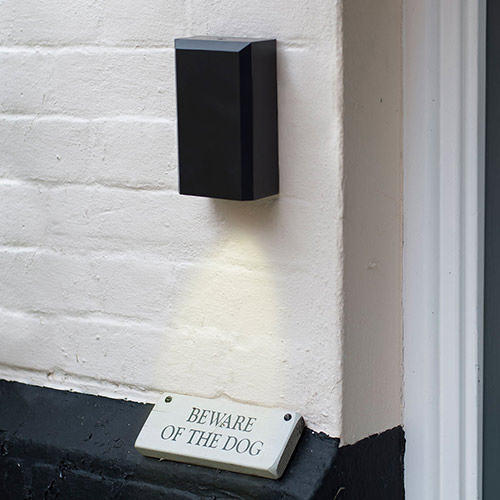
What do I need to consider for buying outdoor lights?
The first thing to think about is the purpose of the lighting. Outdoor lights generally fall into three categories: functional, decorative and security lighting.
Functional lighting helps illuminate paths, steps, entrances and driveways to improve visibility and safety.
Decorative lighting creates atmosphere by highlighting planting, entertaining areas, water features or architectural details.
Security lighting is designed to deter intruders and usually uses brighter LEDs with motion sensors.
Understanding which type you need will help determine the brightness, beam angle and fitting style required.
For front door lighting ideas see our collections:
All Outdoor Lighting
Front Door Furniture
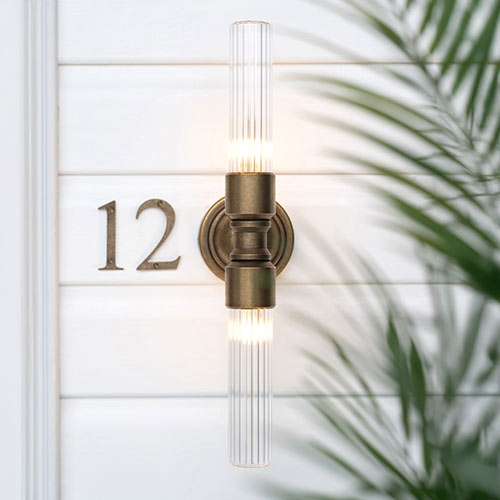
How bright should outdoor lights be?
Brightness is measured in lumens rather than watts. Many homeowners make the mistake of choosing lights that are too bright, which can create glare and spoil the overall effect. Layering several softer light sources often produces a more attractive and balanced garden lighting scheme.
For soft, ambient garden lights used along exterior walls, fence posts and to illuminate architectural features, lights with a lumen outputs from 2-300lm (25W) to 470lm (40W) are often best.
Pathways and entrances require brighter fittings so you can see your way in and out safely. Bulbs with a lumens of around 470 (40W) should be ample.
Security floodlights usually need the highest lumen output, generally around 7000- 1,300lm (100W). Because they are so bright, most are designed with a movement sensor and timer so they don’t stay on for prolonged periods of time.
To embrace dark skies to improve sleep, enjoy star gazing and create a better environment for noctural wildlife, outdoor lights that deflect light downwards are becoming increasingly popular, especially if paired with light limiting spot bulb of around 300lm (30W).
Read our blog: Outdoor lights for dark skies
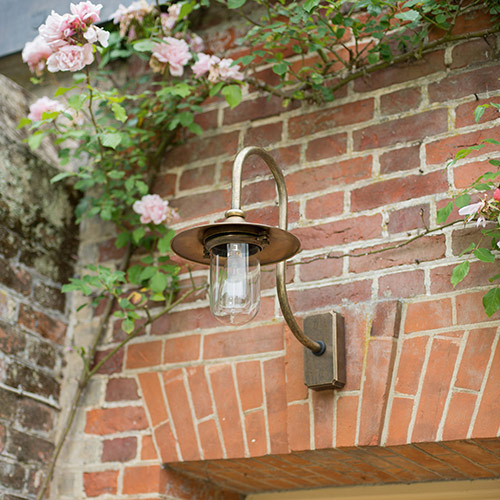
What is an IP rating and is it important?
IP stands for “Ingress Protection” and indicates how well a fitting is protected against water and dust. Thanks to our British weather with its heavy rain, frost and damp conditions throughout the year, choosing the correct IP rating is essential for your safety and the durability of your outdoor lights.
The first digit in an IP rating relates to protection against solid objects such as dust, while the second digit refers to water resistance. For most outdoor wall and porch lights IP44 is considered the minimum suitable rating, as it protects against splashing water.
For fully exposed gardens, driveways and pathways, IP65-rated lights are often recommended because they offer much stronger protection against rain and water jets.
If you are installing lights near ponds, hot tubs or water features, higher ratings such as IP67 may be necessary, as these fittings can withstand temporary immersion in water.
Always check the manufacturer’s guidance before installation.
Read our guide to IP Ratings: IP Ratings Explained - Outdoor
What materials should exterior lights be made of?
BRASS
Our brass is a beautiful, non-corrosive, natural metal that is ideal for outdoor settings. We love it because it not only looks good, but our antiqued brass is very low maintenance and performs particularly well outdoors, making it an ideal, long term investment for our UK climate.
As an alloy of copper and zinc, brass naturally darkens over time and doesn’t rust, making it extremely durable and long-lasting, particularly in coastal areas where moisture and salty air can damage other materials over time. Its warm tones blend beautifully with natural building materials like wood, stone and brick and with the colours of your garden.
We feel the natural, dark patina brass develops over time gives our lights a more characterful and premium appearance while the ageing process also acts as a protective layer, helping it to withstand outdoor conditions even better.
STEEL
A popular choice for a forged iron feel in gardens and porches, our range of painted steel outdoor lights create a classic outline for period properties, or a sleek, modern one for a more contemporary setting.
Steel will corrode in damp conditions, so needs to be painted to keep it protected. Our outdoor lights are all painted in a tough, powder coating process that creates a smooth, hard-wearing and water resistant surface.
PLASTIC
Be aware that plastic or polycarbonate lights are often cheaper and lightweight, but lower-quality versions can become brittle or discoloured after prolonged exposure to sunlight.
THINK ABOUT ENERGY EFFIEIENCY
LED outdoor lights are now the preferred option for most homeowners because they use significantly less electricity and last far longer than traditional halogen bulbs. LEDs are also available in a wide range of colour temperatures.
Warm white lighting tends to create a cosy and inviting atmosphere, while cool white lighting is brighter and often used for security purposes.
Solar-powered lights are another popular choice for gardens, particularly in areas where wiring would be difficult. However, solar lights may not perform consistently during darker winter months in the UK, so mains-powered or low-voltage systems are often more reliable for year-round use.
For more information on our product finishes and how to clean them, see our Knowledge Base pages:
Product Finishes
Maintenance Guides
What types of outdoor lights are there?
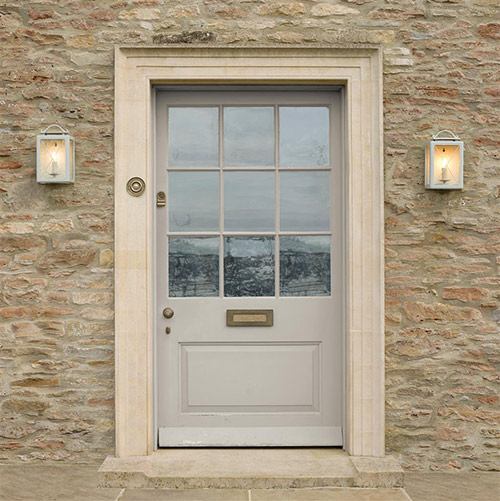
Porch lights
Usually installed beside or above a front or back door, their main purpose is to provide visibility and security around entrances while also adding your home’s kerb appeal.
We make a range of porch lights from traditional ceiling lanterns to sleek modern wall fittings.
Many people choose porch lights with motion sensors, which automatically switch on when movement is detected.
Warm white LED bulbs are popular because they create a welcoming and comfortable atmosphere.
For our full collection, see: Porch Lights
And our blogs:
5 porch lights that make an entrance
Black porch lights for the heritage home
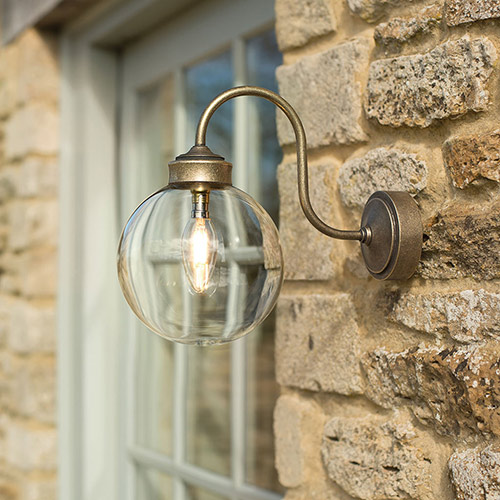
Outdoor wall lights
The most versatile option for exteriors because they can be used around patios, garages, garden walls and outdoor seating areas, these lights are mounted directly onto walls and are available in both decorative and functional designs.
Up-and-down wall lights are popular because they create attractive lighting effects by casting beams both upwards and downwards across the wall surface.
Outdoor wall lights are great for defining outdoor living spaces or to draw attention to architectural features.
For our collection of garden wall lights, see:
Outdoor Wall Lights
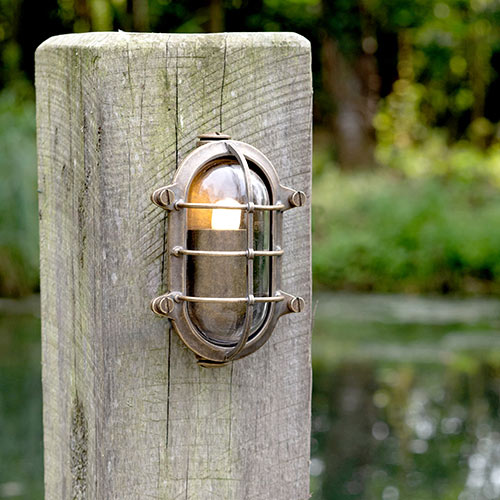
Post lights
Often generated by solar power and mounted on spikes that can be pushed into lawns or bedding soil, post lights are an easy-to-instal option to illuminate driveways, pathways, gates and garden borders because they require no wiring.
Taller, wired post lights are often installed at the entrance to driveways or front gates while shorter bollard-style versions are used to guide you along pathways through gardens, around swimming pools, jetties or ponds.
Festoon lights
These are decorative string lights that typically feature exposed bulbs suspended along a cable, creating a relaxed and inviting atmosphere for patios, pergolas and outdoor entertaining areas.
Festoon lights are ideal for creating ambient lighting rather than strong illumination, making them perfect for social spaces and summer evenings outdoors.
Garden lights
Designed specifically for landscaping and to decorate gardens, courtyards and balconies, garden lights are often used in layers to create depth and atmosphere within outdoor spaces.
There are several different types available, including spike lights, bollard lights, recessed ground lights and spotlights. Spike lights are commonly used to highlight trees, shrubs and flower beds, while bollard lights are ideal for illuminating pathways and driveways.
Recessed lights fitted into decking or paving create a clean and contemporary appearance while improving safety around steps and walkways.
Garden lighting ideas
Our outdoor spaces come into their own over the warmer summer months when we can continue enjoying our gardens long after dusk. Many of the best cosy garden ideas involve soft, ambient outdoor lights to help define specific spaces in your garden, creating a warm inviting glow for relaxing or entertaining. When planning a garden lighting scheme, it helps to think of the garden in layers rather than trying to flood the entire space with light. Good outdoor lighting should guide the eye to defined areas and create depth.
1. Start by identifying key areas you use most often, such as patios, seating areas, garden paths and entrances.
2. Then consider which features you would like to highlight, such as trees, flower beds, sculptures or textured walls.
3. Path lighting is one of the most practical additions to any garden. Low-level bollard lights or recessed pathway lights improve safety while creating a welcoming appearance.
4. Decking lights fitted into steps or timber edges can also reduce trip hazards and add a contemporary look.
5. Consider lighting around patios and entertaining areas, wall lights or festoon lighting can create warmth and atmosphere without overpowering the space.
6. Accent lighting is another effective technique. Spotlights positioned at the base of trees can create dramatic shadows and structure in the garden at night.
7. Uplighting can highlight architectural plants, while downlighting from pergolas or walls provides softer, more natural illumination.
8. Avoid placing lights directly at eye level where possible, as this can create uncomfortable glare.
WHAT KIND OF POWER SUPPLY DO I NEED FOR MY GARDEN?
If you don't have an external electrical socket you can run outdoor lighting from an internal power source. You'll need to make sure that the circuit is protected by an RCD (a residual current device) to break currents when necessary to prevent electric shocks and that it can cope with the additional load you're putting on it.
Always seek guidance from a qualified electrician. If you'd rather not go down the electric route, consider a battery or solar-powered option instead.
DO I NEED SPECIAL BULBS FOR OUTDOOR USE?
It depends on the kind of fixture you buy. Some outdoor lights have incorporated LED boards that are not replaceable but has a lifespan that typically lasts between 20,000 and 25,000 hours (up to 25 years based on three hours' use per day).
You can use regular LED bulbs in units as long as they have a suitable IP-rating (protection from water) with a weatherproof casing; LED bulbs are more energy-efficient and long-lasting.