Aim for a curated look
Select your mix of metals by considering the room's use and overall feeling. Do you want to add a bit of warmth to a cool colour scheme or add a refreshing touch to a warm scheme? A general guideline followed by many designers is to steer clear of placing overly similar shades together, like brass and gold or nickel and stainless steel, as this can look messy. Similarly, avoid combining significantly different undertones, such as brass and gunmetal grey as this can look disjointed and cause other aspects of the room to feel off.
When considering mixing metals, start by assessing their undertones. You can either pair them within their respective colour palettes or choose a contrasting colourway. In this kitchen we have drawn on the charm of classic cottage and farmhouse interiors, incorporating a vintage palette of copper, clay and brass to usher in a feeling of gentle rusticity and plenty of character.
Warm undertones - kitchen
In the kitchen, mixing finishes brings a relaxed, eclectic character that feels warm and welcoming. Clay offers a crisp, timeless foundation, while pairing it with softer, warmer finishes such as Antiqued Brass adds depth and quiet contrast. This combination avoids a uniform look, instead creating a space that feels collected over time, practical yet full of charm. The result is a kitchen that balances refinement with warmth, where each element has its place without feeling overly coordinated.
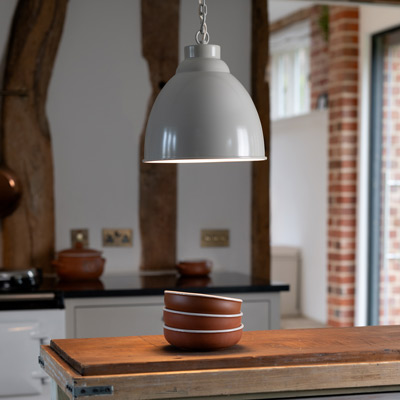
Wharf Pendant in Clay
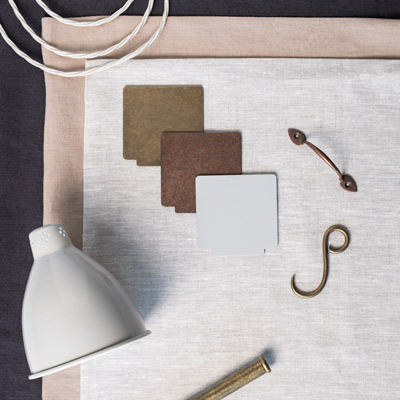
Combine Antiqued Brass, Copper and Clay for gentle rusticity
Finishes with earthy undertones of rust, red, yellow and brown convey a sense of richness and bring warmth and homeliness into a space. Examples of these are Antiqued Brass, Heritage Copper and Bronze Metallic which can be introduced to a cool colour scheme for warmth. Pair these with the cooler tones of Stone or Clay to create the classic charm of a farmhouse kitchen that has evolved over time.
Our Heritage Copper and Antiqued Brass finishes have a beautifully organic patina that will enhance any room with little effort and work to ground a neutral palette creating the appearance of a space that is curated, but lived in.
To find out more and see the products in this lovely kitchen, see Shop The Look: Pair Brass with Copper & Clay
Cool Undertones - bathroom
Cool undertones typically have shades of blue, sliver and grey, imparting a sense of serenity, calmness and a contemporary atmosphere that is ideal in bathrooms, but without a warming element to balance the scheme, it may feel cold. The bathroom is often the most difficult room to consider, especially if you are working with an already established chrome installation and wish to add a feeling of warmth and comfort.
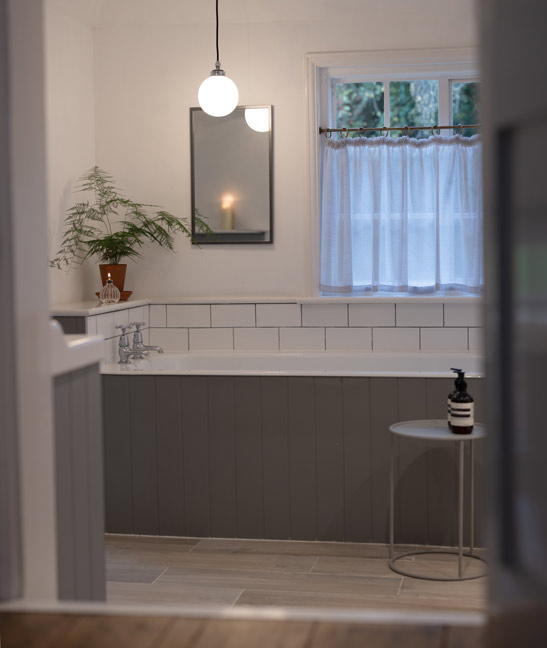
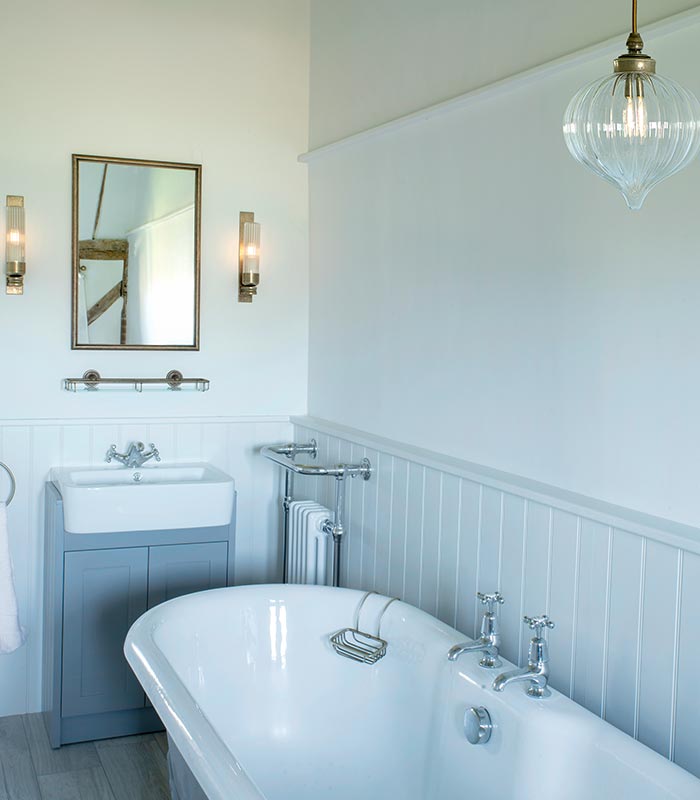
In the bathroom above, soft cool tones set the mood creating a fresh, spa-like simplicity shaped by subtle contrasts and variations in texture. When applied thoughtfully, mixed metals can add a quiet sense of luxury elevating functional spaces and making each part of the room tell its own story.
Here, we have matched the chrome taps with an opal glass pendant light in our bright, reflective Nickel and layred it with rich Antiqued Brass as an accent on the cafe rod curtain pole, and soft sculptural Stone for the bathside table. Add our cool, metallic Polished steel finish for a bathroom mirror, and you create a sanctuary of calm and relaxation in this most important space.
To explore this collection, see our Shop The Look: Nickel with Polished, Stone & Opal Glass
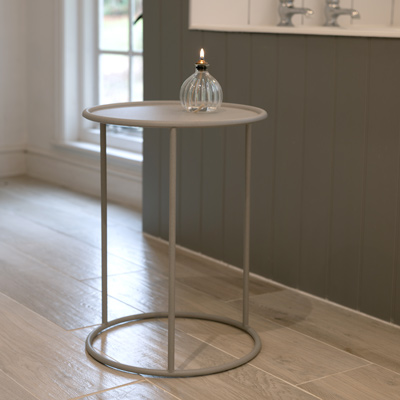
Small Ashbury Table in Stone
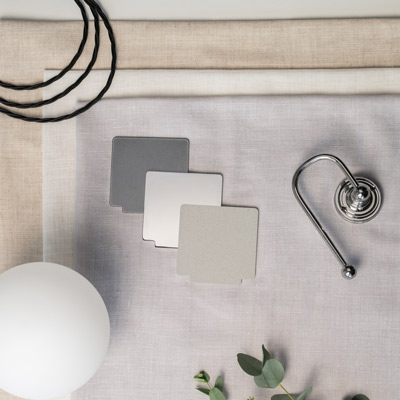
Layer Nickel with Polished & Stone for a soft, textured scheme
Neutral undertones - bedroom
When multiple elements are at play, such as hardware, curtain poles and lighting, a strictly matching approach can make the space feel overly engineered – to be looked at rather than lived in. By introducing difference finishes that work in harmony together the space is softened and relaxation guaranteed.
Black is a handy neutral colour, leaning neither cool or warm, making it adaptable to almost any setting and the perfect partner for any other metals as it offers a subtle point of difference to all the other finishes in a scheme. In our bedroom setting below, we have used soft Beeswax alongside the warmth of Antiqued Brass, Bronze Metallic and Ochre Waterford Linen to create a relaxing atmosphere to be enjoyed and appreciated.
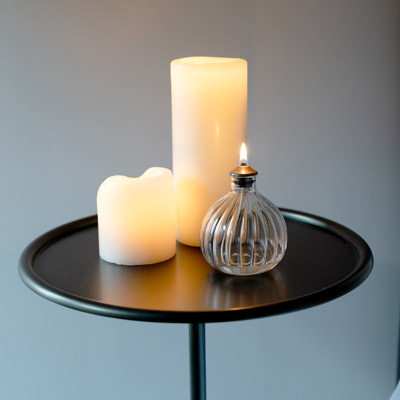
Hampton Table in Bronze metallic
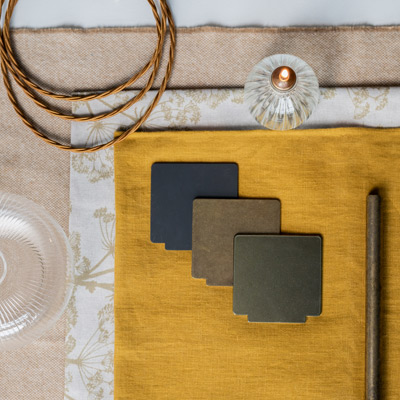
Mix warm metallics for richness
Some classic combinations to try
Antiqued brass with beeswax/bronze metallic/clay/copper/stone/old ivory/matt black and nickel.
Beeswax/matt or gloss black with bronze metallic and brass and/or copper
Beeswax/matt or gloss black with bronze metallic and old gold and/or plain & old ivory
Beeswax/matt or gloss black with bronze metallic and clay/stone and brass/copper
Beeswax/matt black with polished and clay/stone.
Nickel (along with chrome/stainless steel) with brass/copper or old gold.
Nickel (chrome/stainless steel with polished and clay or stone.
Slate Grey with white/polished/nickel/stone/clay and plain ivory.
When deciding the type of finish for your metals, consider the interplay of textures as they influence how light interacts with metal surfaces, offering a balance that stops the space from becoming overly bright or dull.
Opting for a mix of gloss, matt, hammered, polished, opal, glass and textured metal patinas in a room contributes significantly to the overall look. For example, pairing highly reflective nickel with the duller patinas of antiqued brass, beeswax, matt black or stone provides a subtle contrast that perfectly balances elegance and modernity. Similarly, the slight sheen of our polished, clay or bronze metallic finishes contrast beautifully with the textured, matt finish of stone and mottled patina of antiqued brass.
Start by choosing one dominant finish in a room. This could be your existing plumbing, taps, bathroom fittings and door and window furniture, or it could be new metal fixtures. If buying new, try to compare samples first to ensure you are happy with the finish because it can look very different if supplied by different manufacturers!
When you’ve selected your main metal, introduce additional finishes bit by bit to prevent overwhelming the space. The dominant finish should carry the scheme with one or two other finishes used as accents to highlight particular features.
Avoid mixing too many metals
The key to mixing finishes is moderation. Too much metal mixing can backfire and cause your scheme to appear confusing and cluttered. To mix finishes properly, there needs to be a sense of purpose to each metal's presence, so a rule of thumb is to use each type of finish in at least two places in a room to make sure it is balanced. Many designers mix one to two metals in small rooms and no more than two to three metals in large rooms.
Kitchens and bathroom tend to require the most metal finishes so the key to matching these is to stick to two and only add a third if it makes sense as an accent on a door handle or with statement lights. When it comes to kitchens, you may find it useful to divide the room into thirds. The top half is lighting, the middle is electrics and plumbing, and the bottom is cabinet hardware. It often helps to match two of the three elements so you could match your lighting to your kitchen cupboard handles and drawer knobs and choose a contrasting finish for taps, switches and sockets. Or you match your hardware with the plumbing and contrast it to your lighting.
In large or open-plan kitchens where your kitchen pendant lights are further away from your units, matching the finish of your lights to your electrics and plumbing will tie them into the scheme, while using a contrasting finish on the cabinetry will visual interest.
In contrast, a small kitchen might benefit from having the cabinetry hardware matching taps and plumbing to prevent it from looking too busy and letting your kitchen lighting become the star of the mixed metal show as it will draw the eye up giving more sense of space.
To successfully mix metals in a bathroom, keep to one dominant metal, such as all tapware in brass or chrome, and complement it with an accented metal, such as black, clay, stone or bronze metallic mirrors and lighting, providing a subtle yet effective contrast.
To stay up to date with Jim Lawrence, follow us on Instagram, Facebook and Pinterest. Browse our website www.jim-lawrence.co.uk to see all of our hand forged and finished lighting and homeware.