Perfect for
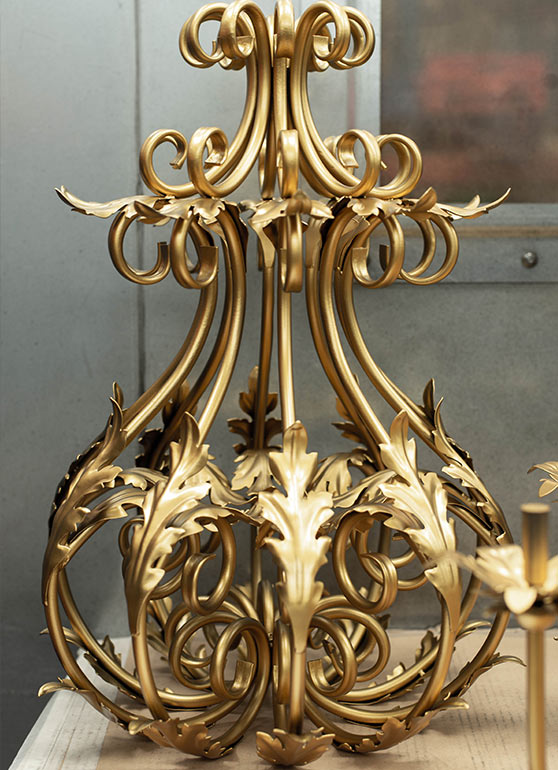
high or vaulted ceilings in either a town or country home, our largest pendant enhances a period interior with its dramatic but delicately made qualities. With its beautiful Rococo style scrolled ironwork and delicate acanthus leaf design finished in old gold, its beauty is a testament to the skills of our Suffolk craftsmen.
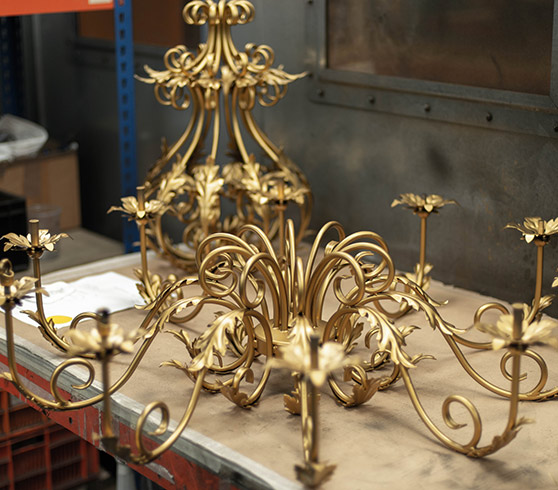
Named after the town of Montgomery in Wales, this
Baroque design was influenced by the nearby
Powis Castle, a medieval castle, fortress and country house now cared for by the
National Trust. Housing an extensive and magnificent collection of paintings, sculpture, furniture and tapestries, there is a wealth of inspiration for all interior lovers.
Powis is one of the few Baroque gardens to survive almost intact since the 1680s. Lavish and expansive, we wanted to reflect these qualities in our own design. Wandering the halls of the castle itself you will uncover many treasures, notably the 16th century Roman Table inlaid with lapis lazuli and other semi-precious stones: the Pietre dure table. Golden-hued acanthus leaf unfurls across the stone and the gilded legs demonstrate stunning workmanship.
The Baroque style followed the
Renaissance period of art, embracing exuberant detail and grandeur to guarantee a sense of awe. Many of our British stately homes feature baroque art and architecture, inspiring us right through to the modern age and encouraging us to enjoy elements of opulence in the every day.
Our workshop
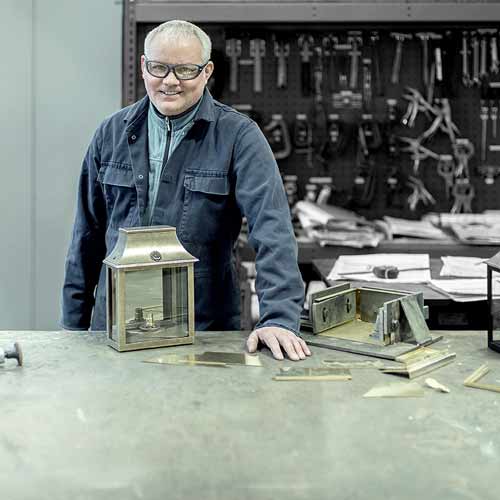
Technical Lead Lee Saxby says the Montgomery is his favourite light to make. “It’s a challenge”, he says, “but it’s far more interesting to work on than a light with a simpler design. I love welding the component parts together. The detail is beautiful, and it feels great building all the parts so that it comes together.
It takes around 14 hours to make the Montgomery from scratch. First, the ten shade arms and all the intricate scrolled metalwork is bent and hammered into shape in the forge by our blacksmith, Tom. Then it is collected with all the separate leaf details and given to
the welders to put together. Using their technical drawings as a guide, the welders use a series of numbered ‘jigs or braces to hold the leaves and scrollwork in place so they can be welded together.
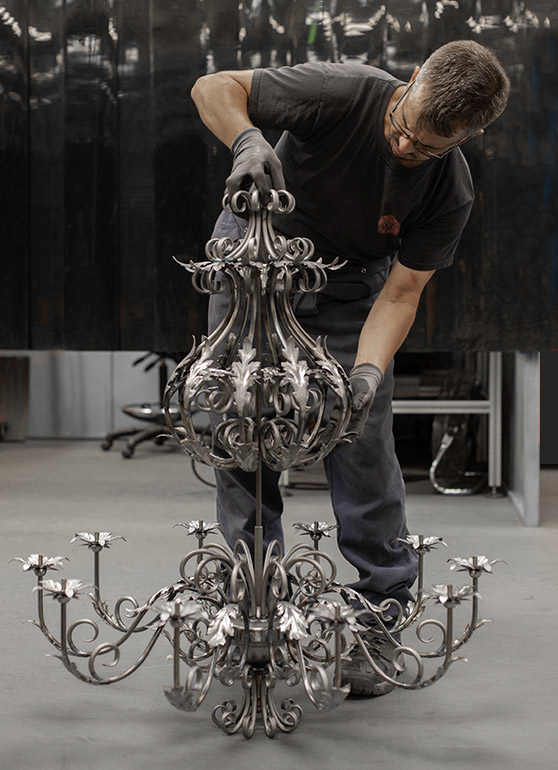
Working from the bottom up, they assemble the light arm by arm, piece by piece, building it into larger and larger sections until finally, the whole thing is complete. “The most difficult part is the middle section where the shape of the light suddenly becomes a lot smaller,” says Lee. “We spend a lot of time walking around it to make sure the shape is right and in proportion.”
When finished in the workshop, the Montgomery is put into a blasting machine to clean it up for the paint line where it is powder coated in matt black.
The paint team then build up the
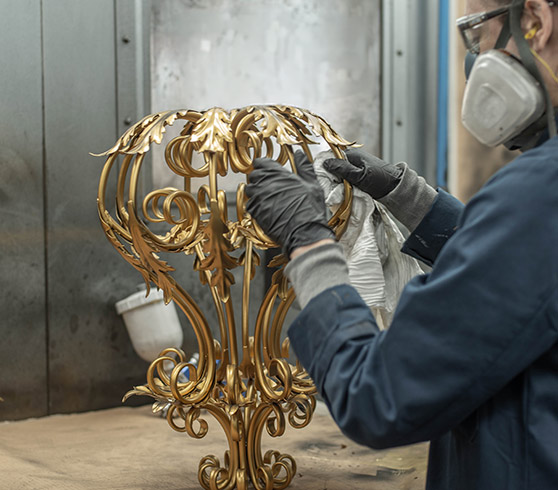
old gold finish in layers; first, hand spraying it with wet, old gold paint; then dusting it with a layer of wet matt black paint that is wiped back with paint thinner leaving just the black that settles into the grooves and crevices of the detail so that it enhances the relief.
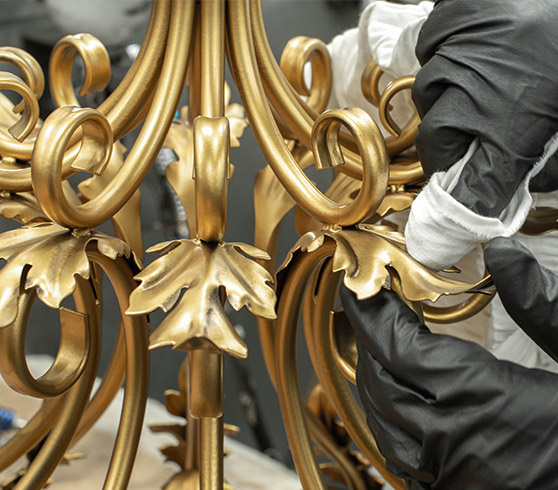
Finally, it is hand sprayed with another dusting and flecks of matt black to mimic the aged, slightly mottled look of old gold. This is a very ‘painterly’ process that involves building up layers of paint and hand touching the embossed details to make them stand out.
To find out more about our painting process read our interview with our
Painting Team.
For more information about your Jim Lawrence lighting, explore our Knowledge Base for handy guides, FAQs and top tips. Browse the Jim Lawrence website to see all of our hand forged and finished lighting and homeware.