Modern: Embrace bold geometric patterns and abstract designs in areas you wish to make a focal point. Keep the rest of the decor minimal to let the patterns stand out.
Traditional: Opt for classic patterns like damasks, paisleys, or florals. Think folksy, use lace and or Skandi influences that can be used in rich, ornate fabrics and wallpapers and mixed with vintage finds or heritage pieces.
Eclectic: Mix and match various patterns and styles. Juxtapose modern, architectural furniture, lighting or stand out pieces with florals, antiques and vintage inspired colours, wallpaper or soft furnishings. This approach blends different elements into a unique, personalized space.
3. INTRODUCE PATTERN GRADUALLY
If you are not sure how much pattern you want in a room, start small by using it in specific areas such as
curtains,
lampshades,
cushions, rugs, or
throws that can be moved around and exchanged. Then you can experiment without overwhelming the space. If you are happy with the results and want more, introduce similar colours or patterns evenly throughout the room to keep a sense of balance.
4. CREATE A FOCAL POINT
Patterns can be used to create focal points in a room. A patterned
feature wall, statement rug or
statement light will draw the eye and set the tone for the space. When using patterns, ensure they stand out by surrounding them with neutral elements that allow the pattern to shine without visual clutter.
5. CONSIDER SCALE
Make sure the patterns you choose are in proportion to the size of the room - the larger the room, the larger the patterns you can get away with. Similarly,
scale down for smaller rooms. Designers often focus on one large scale print to create a bold statement such as on an upholstered chair, sofa or ottoman, then mix it with a smaller patterns for curtains and soft furnishings. This way you can achieve a varied but cohesive look.
6. LAYER UP
A trick for a successful scheme is to use no more than 3 patterns in a room. If you group them together within the same colour family, you will add to the sense of harmony and balance. Ensure the patterns don’t clash by varying their sizes and keep some elements more subdued.
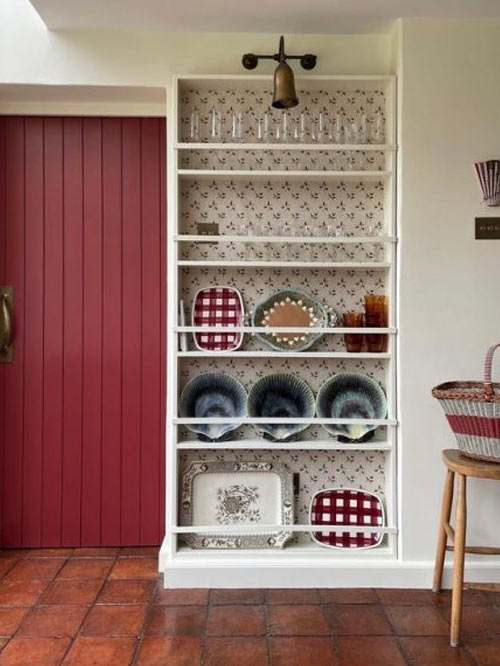
Red kitchen colour scheme by SJ Axelby
@sjaxelby
7. BALANCE WITH COLOUR
When integrating patterns into your decor, coordinate them with your room’s colour palette. Patterns should complement, rather than compete with the room’s primary colours. For example, a monochromatic room can be livened up with a bold patterned rug, while a room with multiple colours might benefit from patterned elements that echo the existing hues. To avoid a feeling of clutter, balance your patterned items with solid blocks of colour on large surfaces, such as floors, carpets and walls as this will ground the patterned elements.

Follow us